
Vulpine Droid Side-Scrolling Sprint
Reviews
This game succeeds by focusing on what matters: tight controls and well-designed levels. The pixel art is functional rather than flashy, keeping the screen readable during fast play. Each stage presents a new puzzle of timing and positioning. The lack of power-ups or gimmicks means success depends entirely on player skill. It is an excellent choice for anyone who enjoys the satisfaction of mastering a difficult sequence and seeing their time improve with each attempt.
About this game
Core Gameplay Loop
This game strips platforming down to its essentials. Players guide a robotic fox character through a series of hand-crafted stages. The primary objective is to reach the end of each level in the shortest time possible. Success depends on mastering basic moves: running, jumping, and avoiding obstacles. There are no power-ups or complex mechanics to learn. The challenge comes from the level layouts themselves, which require careful observation and split-second decisions.
Visual Style and Atmosphere
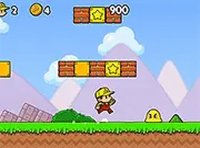
The pixel art aesthetic evokes the look of classic arcade and home console games from the 8-bit and 16-bit eras. Colors are bright and distinct, making obstacles and platforms easy to read at a glance. The animation is smooth, giving the robotic fox a lively feel despite the simple sprite work. Backgrounds are kept minimal to keep the player's focus on the action. This clean visual design helps reduce visual clutter, which is important for a game that demands fast reactions.
Level Design Philosophy
Each stage introduces a new arrangement of platforms, gaps, and hazards. Early levels teach basic timing and distance judgment. Later stages combine these elements in more complex patterns, requiring players to plan several moves ahead. The design encourages repeated attempts, as memorizing the layout is key to improving your time. There are no random elements, so every failure is a learning opportunity. This creates a fair but demanding experience where progress comes from skill development.
Control Scheme and Responsiveness
The controls are limited to keyboard inputs, typically the arrow keys or WASD for movement and a separate key for jumping. Input response is immediate, with no noticeable lag. The jump arc is consistent, allowing players to predict landing positions accurately. This precision is essential for navigating tight gaps and narrow platforms. The simple control set means that any mistake is clearly the player's fault, not the game's. This direct feedback loop is a hallmark of well-designed speedrun games.
Replay Value and Self-Improvement
The core motivation comes from beating your own records. Each level displays your completion time, encouraging you to shave off fractions of a second. Finding optimal routes and executing perfect sequences becomes a personal challenge. The game does not rely on collectibles or unlockables to keep players engaged. Instead, the satisfaction of mastering a difficult stage and seeing your time drop is the primary reward. This focus on self-improvement gives the game long-term appeal for those who enjoy refining their skills.
Technical Accessibility
Built using HTML5 technology, the game runs directly in a web browser without any downloads or plugins. This makes it accessible on a wide range of devices, including desktop computers, laptops, and some tablets. Performance is generally smooth even on older hardware, thanks to the lightweight pixel graphics. The small file size means quick loading times. This technical simplicity aligns with the game's overall philosophy of removing barriers between the player and the experience.




Comments
0 comments