
Labyrinth Unity Quest
Reviews
Labyrinth Unity Quest stands out for its simple yet deep mechanic of moving a growing group through a maze. The three-dimensional perspective adds genuine spatial challenge without being gimmicky. Trap placement forces careful planning, and the gradual difficulty curve keeps each level engaging without becoming frustrating. It is a polished, focused puzzle experience that respects the player's time and intelligence.
About this game
Core Gameplay Loop
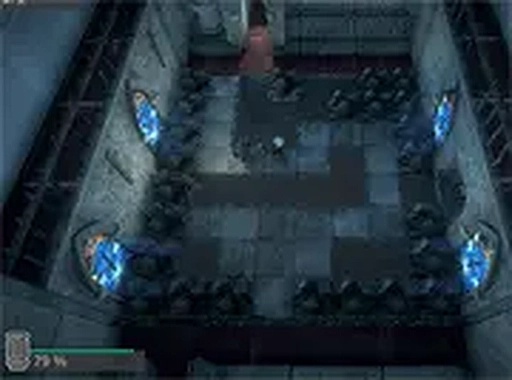
In Labyrinth Unity Quest, players take control of a single character moving through a three-dimensional maze. The primary objective is to locate and gather all scattered companions, then lead the entire group to the designated exit point. What sets this experience apart is the group movement mechanic: once two or more characters are collected, they move as a single unit. This transforms simple navigation into a strategic exercise, as the size of the group directly impacts how you can maneuver through tight corridors and around obstacles.
Maze Architecture and Traps
The maze is constructed with a series of interconnected pathways, each presenting its own set of challenges. Hidden traps are placed throughout the environment, requiring careful observation before committing to a direction. These traps are not random; they are fixed elements that players must learn to anticipate and avoid. The three-dimensional perspective adds a layer of depth, making it easier to spot potential hazards from a distance but also requiring precise movement to navigate safely. Each level introduces new trap configurations and maze layouts, ensuring that the challenge remains fresh.
Strategic Group Management
Managing the growing group of characters is the heart of the puzzle. As more allies are collected, the group becomes larger and more difficult to steer through narrow passages. This forces players to think ahead about the order in which they collect characters and the path they take. Sometimes it is better to leave a companion behind temporarily to scout ahead, then return with the full group. The game rewards patience and careful planning over speed, as one wrong move can trigger a trap and force a restart.
Visual and Technical Design
The game uses a clean, three-dimensional visual style that clearly presents the maze layout without unnecessary clutter. Each character is distinct, making it easy to track the group's composition. The interface is minimal, focusing attention on the puzzle itself. Full-screen support is available for an uninterrupted experience, and the game runs smoothly in standard desktop browsers. There are no distracting animations or sound effects that might interfere with concentration, allowing players to focus entirely on solving the maze.
Progression and Difficulty Curve
Levels are arranged in a sequence that gradually increases in complexity. Early stages introduce the basic mechanics of movement and collection with simple, open mazes. Later levels incorporate more intricate trap patterns and require longer routes to gather all characters. The difficulty curve is gentle but consistent, giving players time to master each new concept before moving on. This structure makes the game accessible to newcomers while still providing a satisfying challenge for experienced puzzle enthusiasts.




Comments
0 comments